
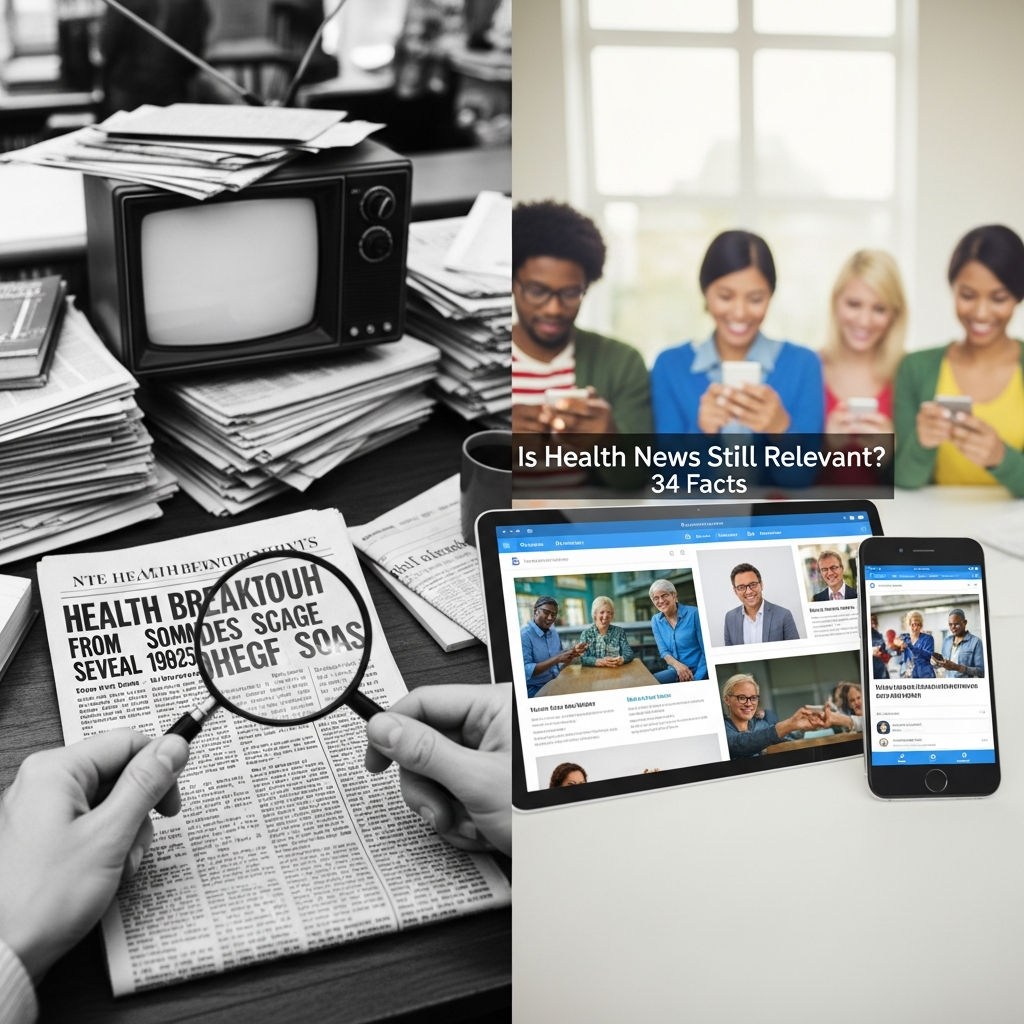
The Information Paradox: Is Health News Still Relevant?
In an era where a quick search on a smartphone can yield millions of results for a single symptom, the question arises: Is traditional health news still relevant? We live in an age of “information overload,” where groundbreaking medical studies are published daily, yet public trust in media is at an all-time low. The paradox is that while we have more access to health data than ever before, the signal-to-noise ratio has never been more skewed.
Understanding whether health news remains a vital resource requires a deep dive into how medical information is produced, consumed, and verified. From the rise of social media influencers to the integration of Artificial Intelligence in medical reporting, the landscape is shifting. To help navigate this complex environment, we have compiled 34 essential facts about the state of health news today, its challenges, and its undeniable necessity in a modern society.
The Evolution of Medical Journalism (Facts 1-7)
How we receive health information has undergone a seismic shift over the last two decades. What was once the domain of specialized newspaper desks and evening news segments is now a 24/7 digital stream.
- 1. The Decline of Specialized Desks: Many traditional newsrooms have cut specialized medical and science desks, leading to generalist reporters covering complex clinical trials.
- 2. The 24-Hour Cycle: The pressure to produce “fresh” content around the clock often leads to the reporting of preliminary studies that haven’t been fully vetted.
- 3. Peer-Reviewed vs. Pre-Print: More news outlets are reporting on “pre-print” studies—research that has not yet undergone peer review—increasing the risk of spreading inaccurate data.
- 4. The Shift to Social Media: According to recent surveys, nearly 40% of younger adults get their primary health information from platforms like TikTok and Instagram rather than news sites.
- 5. Direct-to-Consumer Impact: Health news often acts as a bridge between complex medical journals and the general public, translating jargon into actionable advice.
- 6. Visual Storytelling: Modern health news relies heavily on infographics and short-form video, which can simplify complex topics but may also strip away necessary nuance.
- 7. The Role of News Aggregators: Algorithms on platforms like Google News and Apple News now dictate which health stories go viral, often prioritizing sensationalism over scientific rigor.
The Reliability Gap: Navigating Misinformation (Facts 8-14)
Relevance is tied directly to reliability. When health news fails to provide accurate information, it loses its purpose. This section explores the hurdles facing the industry.
- 8. Clickbait Headlines: The “attention economy” encourages headlines like “Coffee Cures Cancer” or “The Secret to Weight Loss,” which rarely reflect the actual findings of the cited research.
- 9. The Replication Crisis: Health news often fails to mention that many psychological and medical studies cannot be replicated, leading to a “fact” that isn’t actually a fact.
- 10. Conflict of Interest: Many health stories are based on studies funded by pharmaceutical or food companies, a detail often buried at the bottom of an article.
- 11. Correlation vs. Causation: A common pitfall in health reporting is presenting a correlation (two things happening at once) as a causation (one thing causing another).
- 12. The “Superfood” Myth: Marketing-driven health news has popularized terms like “superfoods,” which are often not recognized as a scientific category by nutritionists.
- 13. Speed vs. Accuracy: During the COVID-19 pandemic, the rush to be first with a story often led to the dissemination of conflicting advice, damaging public trust.
- 14. Echo Chambers: Personalized news feeds often show readers health information that confirms their existing biases, making it harder for them to accept new scientific evidence.
Why Accuracy Matters More Than Ever
The danger of inaccurate health news isn’t just a misunderstanding; it’s a public health risk. When misinformation regarding vaccines, diet, or chronic disease management goes viral, the real-world consequences can be measured in lives lost. This is why high-quality, evidence-based health journalism is more relevant than ever.
7 Reasons Why Health News is Essential Today (Facts 15-21)
Despite the challenges, health news remains an indispensable pillar of modern life. It serves functions that social media “influencers” simply cannot replicate.
- 15. Public Health Alerts: Health news is the primary vehicle for notifying the public about food recalls, infectious disease outbreaks, and environmental hazards.
- 16. Demystifying Medical Costs: Investigatory health journalism often exposes the high costs of healthcare, insurance discrepancies, and drug pricing.
- 17. Patient Empowerment: Quality reporting helps patients understand their diagnoses, providing them with the vocabulary to ask their doctors better questions.
- 18. Holding Institutions Accountable: Health news outlets play a watchdog role, investigating hospitals, pharmaceutical giants, and regulatory bodies like the FDA.
- 19. Highlighting Medical Innovations: News is how most people learn about groundbreaking therapies, such as CRISPR gene editing or new immunotherapy treatments for cancer.
- 20. Reducing Stigma: Responsible reporting on mental health, reproductive health, and HIV/AIDS has been instrumental in reducing societal stigma over the decades.
- 21. Global Health Connectivity: News allows us to track global health trends, such as the rise of antibiotic resistance, which requires a collective international response.
The Impact of Technology and AI (Facts 22-28)
Technology is a double-edged sword. While it provides new ways to distribute news, it also introduces new risks to the authenticity of health information.
- 22. AI-Generated Content: Many lower-tier health sites now use AI to rewrite medical articles, which can lead to “hallucinations” where the AI invents medical facts.
- 23. Personalized Health Feeds: Wearable devices (like Apple Watch or Fitbit) are beginning to integrate news feeds based on the user’s specific biometric data.
- 24. Fact-Checking Tools: New AI tools are being developed to help journalists and readers instantly verify the claims made in a health article against a database of clinical trials.
- 25. Data Privacy Concerns: Reading health news often leaves a digital footprint, which data brokers can use to target users with specific pharmaceutical advertisements.
- 26. Telehealth Integration: Some news platforms are now integrating “Book Now” buttons for telehealth appointments directly within articles about specific conditions.
- 27. Virtual Reality (VR) Reporting: High-end news outlets are using VR to help readers “visualize” how diseases affect the body or how a new surgery is performed.
- 28. The Rise of “Expert” Newsletters: Substack and other platforms have allowed doctors to bypass traditional media and send health news directly to their audience.
Mastering Health Literacy: How to Filter the Noise (Facts 29-34)
To determine if health news is relevant to *you*, you must develop the skills to filter it. Health literacy is the modern survival skill.
- 29. Check the Source: Is the news coming from a reputable medical institution (like the Mayo Clinic) or a site with an agenda?
- 30. Look for the “Primary Source”: A reliable health news story will always link to the original study or clinical trial it is discussing.
- 31. The “Too Good to be True” Rule: If a news story promises a miracle cure or a “secret” doctors don’t want you to know, it is almost certainly false.
- 32. Check the Publication Date: Medical science moves fast; an article from three years ago may contain outdated or even dangerous advice.
- 33. Consider the Sample Size: News stories often report on studies with only 10 or 20 participants. Large-scale human trials are the only ones that should significantly alter your health behavior.
- 34. Consult a Professional: Health news should be a starting point for a conversation with a doctor, not a replacement for professional medical advice.
Conclusion: The Verdict on Health News
Is health news still relevant? The answer is a resounding yes—but with a caveat. It is relevant only if it is consumed with a critical eye. We have moved from an era of information scarcity to an era of information scrutiny. The responsibility has shifted from the publisher to the reader to verify and validate what they are learning.
When used correctly, health news empowers individuals to take control of their well-being, stay informed about global threats, and understand the rapidly evolving world of medical science. By focusing on evidence-based journalism and maintaining high standards of health literacy, we can ensure that health news remains a vital tool for a healthier future.